Texas Bird Watching Tours: What Serious Birders Check Before Booking
Search for a Texas bird-watching tour, and dozens of operators, lodges, and package deals claim to be the best base in the Lower Rio Grande Valley. Serious birders often plan trips months in advance around specific migration windows and target species.
A poor choice can turn a week-long itinerary into missed sightings, long drives, and limited access to prime birding locations. According to the U.S. Fish & Wildlife Service, 96 million Americans participate in birding, and 43 million travel specifically to watch birds.
In this guide, you’ll find five questions that help separate a genuinely birder-focused operation from one that simply markets itself that way.
Five Questions to Ask Before Booking Any Texas Bird Watching Tour
Before booking any Texas birdwatching tour, ask, "How far is the lodge from the first hotspot?" Does it serve breakfast before dawn? Is there on-site gear access? Does the guide know the RGV specifically, not just Texas broadly?
And is the lodge genuinely part of the birding community, or does it simply accommodate them?
1. How Far Is the Lodge from the First Hotspot?
Distance from your lodging to the first hotspot is the most consequential decision on any RGV itinerary, and it is the one most commonly glossed over in tour descriptions.
A departure at 4:45am to catch the dawn chorus is irrelevant if 30 minutes of that window disappears in a vehicle. Pre-dawn light changes which species are visible, which calls carry, and which sites are even reachable before activity drops.
The Lower Rio Grande Valley's four counties document at least 520 bird species, 300 butterfly species, and over 1,200 plant species (U.S. Fish & Wildlife Service LRGV Refuge Species), the most biologically diverse floodplain in the United States.
Thirteen hotspots with full visitor amenities sit within 10–35 minutes of central Alamo, and every floodplain hotspot falls within 90 minutes. An operational base that does not match that geography adds friction from the first morning.
2. Does the Lodge Serve Breakfast Before Dawn?
Most lodges open their breakfast service at 7am or later. Most serious birders are already at their first hotspot by then. A lodge without pre-dawn food access forces a choice between eating and birding, and experienced birders already know which one loses.
The question to ask is specific: not "does breakfast come with the room" but "can I access food at 4:30am without advance preparation?" A 24/7 cold breakfast and lunch setup available from the moment you return from an evening session to the moment you leave for a dawn one removes that decision entirely.
3. Can You Replace Forgotten or Broken Gear Without Losing a Morning?
Forgotten binoculars, a dead head torch battery, or a broken tripod plate are not rare events on a multi-day birding trip. For a birder staying at a lodge without an on-site birding gear store, which means a 45-minute round trip to a general outdoor retailer if one is open or a cancelled session.
An on-site store stocking birding-specific equipment, including optics such as Swarovski binoculars and scopes, converts what would be a half-morning loss into a five-minute fix.
The
Fun Things for Birders store at Alamo Inn B&B, Gear and Tours, carries Swarovski optics and birding equipment, so forgotten gear is a five-minute fix, not a cancelled morning session.
4. Does the Guide Know the RGV Specifically, Not Just Texas?
Texas holds over 675 documented bird species across 269,000 square miles. A guide with general Texas knowledge and one with deep RGV patch knowledge are not interchangeable for a trip targeting Altamira Oriole, Green Jay, or Ringed Kingfisher on a specific migratory window.
The RGV requires knowing which resacas are holding water in a given season, which thorn scrub patches are active on a particular morning, and which access roads are passable after rain.
A guide who cannot answer those questions without naming specific RGV patches is a generalist, and for a region this complex, that distinction directly affects your results.
Birding generated $279 billion in total economic output in 2022 and supported 1.4 million jobs (U.S. Fish & Wildlife Service), a scale that rewards the regions and operators with genuine expertise, not broad-brush claims.
5. Is the Lodge Part of the Birding Community?
There is a meaningful operational difference between a lodge that accommodates birders and one that is built around them. The first treats birding as a guest amenity.
The second shapes its entire infrastructure, breakfast timing, gear access, guide knowledge, information resources, and community connections around what birders need from arrival to departure.
"It is the place that birders love. Deep in the Rio Grande Valley, a place owned and operated by a birder. We loved our stay." (Ray Hudson, Google). "If you want to bird and get info, be sure to talk to Keith at The Alamo Inn" (Paul Br., Google).
Peer endorsement from working birders, not marketing copy, is the most reliable signal that an operation has genuinely embedded itself in the community.
Why Your Lodge Determines the Outcome
Most articles about Texas bird watching tours evaluate operators and packages independently of where you sleep. That separation misrepresents how an RGV birding trip actually works.
1. The Pre-Dawn Window Is the Margin
The first 90 minutes of light on any given morning carry the highest species activity of the day. Dawn chorus, feeding behavior, and territorial movement all peak in that window.
A lodging decision that costs 30 minutes of drive time each way, each morning, compounds across a five-day trip into more than four lost prime-light hours.
That is not a logistical inconvenience. It is the actual margin between a good species count and an exceptional one. The birders who consistently post the highest site counts in the RGV are the ones whose operational base puts them at the gate of the first hotspot as the light breaks, not in a vehicle watching it happen.
2. Guide and Lodge Integration Is the Content Gap
Every top-ranking article on Texas bird-watching tours evaluates guides separately from lodging. None of them address what happens when:
- the guide operates from within your lodge
- when pre-trip briefings happen at breakfast
- when evening debriefs identify the next morning's priority sites
- when the guide knows the gear store inventory and can pull a loaner if needed
That operational integration is not described in any competitor content because most tour operators do not offer it from a single base. It is the structural difference between a good birding trip and a truly memorable one, and it begins with choosing a lodge where the guide and the operation are the same entity.
How Alamo Inn B&B, Gear and Tours Is Built Around This Principle
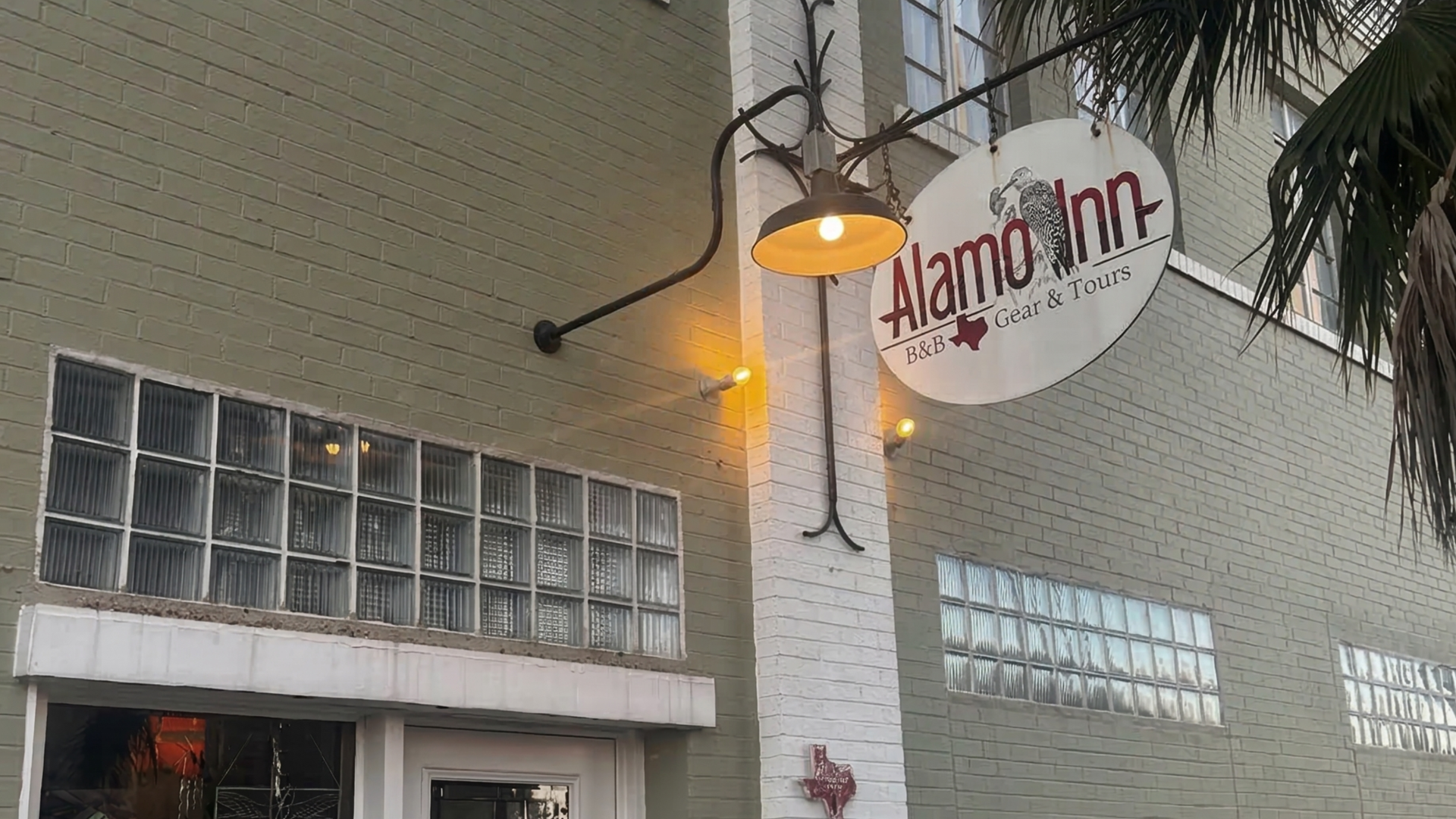
Alamo Inn B&B, Gear and Tours has operated from 801 Main Street, Alamo, Texas, since November 1999, twenty-seven years building infrastructure specifically around what birders need before first light and after last light.
The operation includes 22 rooms across two historic buildings, a
birding gear and outdoor equipment store carrying Swarovski optics,
guided group birding tours and packages, and 24/7 cold breakfast and lunch included in every room rate.
What Guests from Over 40 Countries Have Said
"They are centrally located to be able to visit several different birding areas during your stay. They completely cater to birders." (Paula Burch, Google)
"Great place to stay when going birding in South Texas. They cater to birders by having their breakfast room open 24/7." (Ann Obrien, Google)
Keith Hackland and Audrey Jones have been on-site owner-operators since opening, with the same team, the same buildings, and the same RGV patch knowledge accumulated over more than a quarter-century.
Alamo Inn B&B, Gear and Tours was featured in the Netflix documentary Birders, and guests from over 40 countries have stayed at the property.
BirdersOnTheRoad.com provides additional resources on regional birding, trip reports, and video content for planning and post-trip reference.
Frequently Asked Questions
Q1. What is the best time of year to go on a Texas bird-watching tour in the RGV?
The RGV offers year-round birding with no genuinely off-season. Winter (November–February) brings resident species plus large numbers of wintering waterfowl, raptors, and warblers.
Spring migration (March–May) produces the highest species diversity and the greatest chance of rarities. Summer adds breeding neotropical species. Each season targets a different profile of birds, so the best time depends on your target list, not the calendar.
Q2. How many bird species can I realistically expect to see on a week-long RGV tour?
Experienced birders on a focused week-long RGV trip commonly reach 150–200 species. The region holds at least 520 documented bird species (U.S. Fish & Wildlife Service), with species from both temperate North America and tropical Mexico present simultaneously.
The number you achieve depends on guide expertise, hotspot access, season, and critically, how much of the pre-dawn window you actually reach on foot at the site.
Q3. Is a guided Texas bird-watching tour necessary, or can I self-guide in the RGV?
Both approaches work. Experienced birders with prior RGV exposure and strong knowledge of resaca habitat patterns often self-guide effectively using eBird data and local hotspot resources.
Guided Texas bird watching tours add value primarily for first-time visitors, those targeting specific species with narrow site windows, and international guests unfamiliar with RGV access logistics.
The correct answer depends on your experience level and target list, not on a general preference for guided versus independent travel.
Q4. What should I look for in a birding gear store on a multi-day RGV trip?
Optics are the priority; a store should stock binoculars and scopes from recognized brands, including Swarovski, and have staff who use them in the field.
Beyond that: replacement batteries for head torches and GPS units, field guides specific to Texas and the RGV, extra memory cards, and cleaning supplies for optics exposed to coastal humidity.
A store staffed by working birders rather than general retail staff makes the difference when you need a field-specific recommendation under time pressure. Browse what's available at the
Fun Things for Birders store before your trip.
Q5. What does '24/7 breakfast access' actually mean in practice for a birder?
It means cold breakfast and lunch fixings sufficient to fuel a pre-dawn departure are available at any hour without advance arrangement or waiting for a dining room to open. For birders leaving at 4:30am, this removes the choice between eating and making first light at the hotspot.
It is operationally different from a standard B&B breakfast that opens at 7am, and it is one of the clearest indicators that a lodging operation was designed around birding schedules, not general hospitality norms.
Plan Your RGV, Texas, Bird Watching Tour
A successful Texas bird-watching tour depends on more than a species checklist. The best trips combine expert guides, nearby hotspots, reliable gear access, and a lodge built around the needs of serious birders from sunrise to sunset.
Reserve your stay at Alamo Inn B&B, Gear and Tours, the largest lodge dedicated to birders in North America.
Located in the heart of the Lower Rio Grande Valley, Alamo Inn has welcomed birders since 1999 with early breakfasts, on-site optics, and quick access to the region’s top birding locations.
Experience the best of nature and comfort at
Alamo Inn B&B, Gear and Tours.