Guided vs. Self-Guided Bird Watching Tours: Which Fits Your Trip
Search for
bird-watching tours in the Lower Rio Grande Valley, and you will find guided outings, self-guided checklists, and refuge maps, all claiming to be the right approach. Some birders want an expert leading the way to a target species. Others prefer to set their own pace on a quiet trail at sunrise.
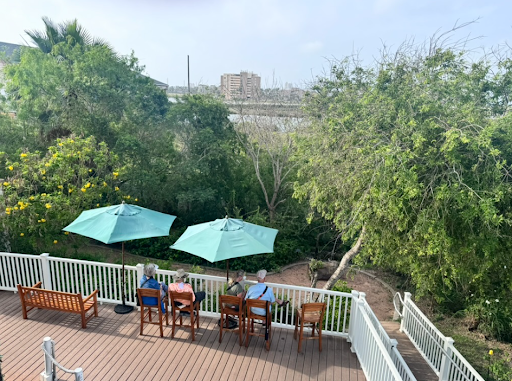
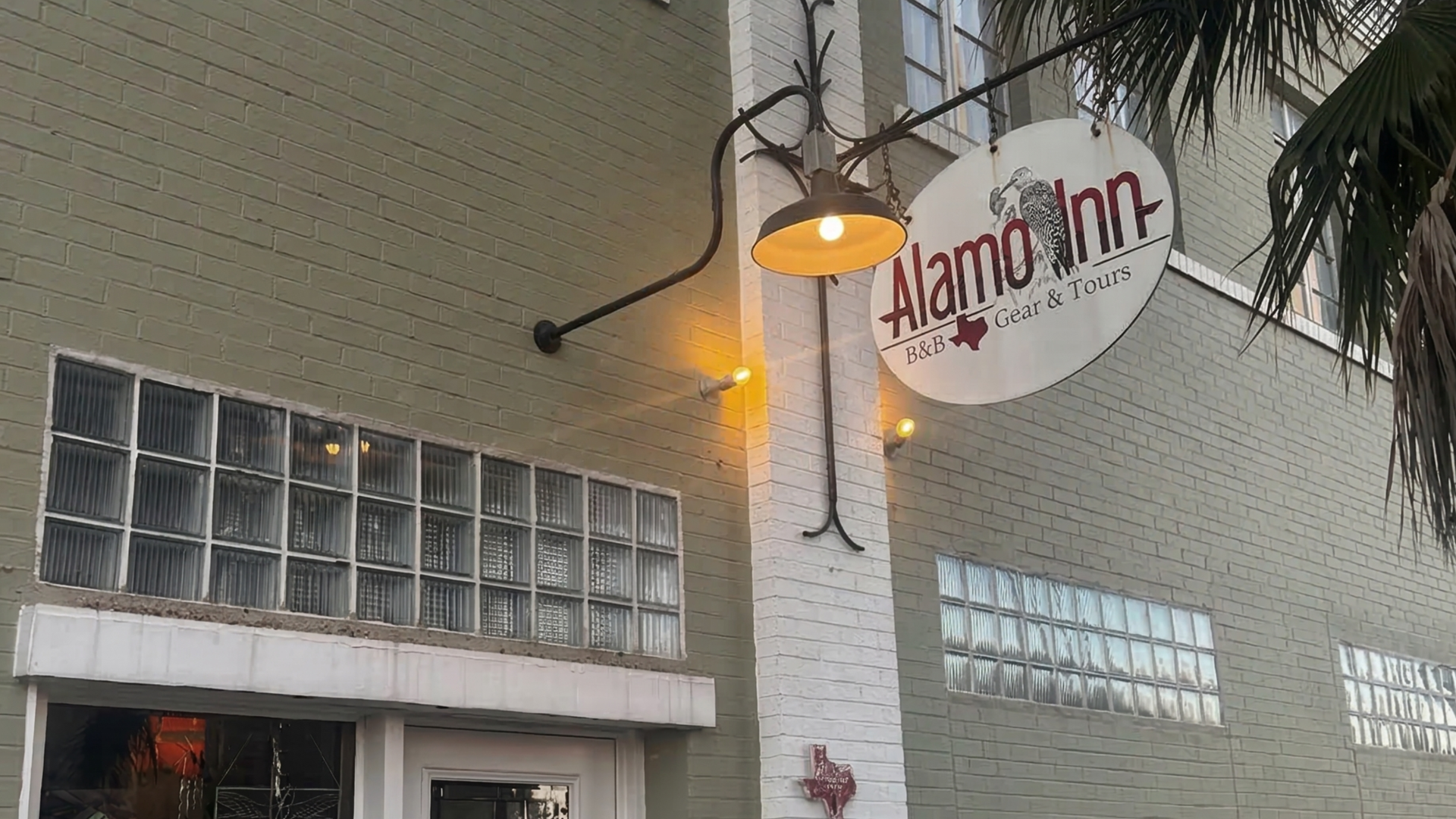
You can book a guided trip through Alamo Inn B&B and connect with an independent local expert who knows exactly where target species are active that week.
Or you can take a self-guided trip using the free refuge bird walks and the Inn's own gear shop to bird on your own schedule. Your right choice depends on what you are trying to see and how much time you have to find it.
This guide breaks down what each option actually involves, so you can choose the one that fits your schedule, skill level, and goals instead of just the one that ranks first in a search.
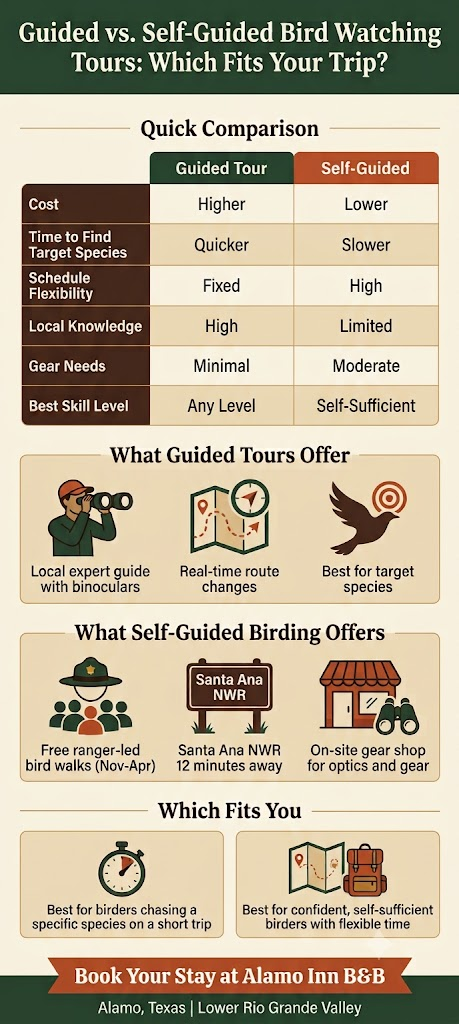
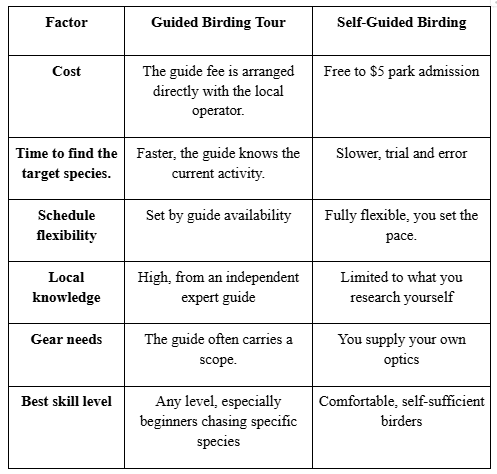
Quick Comparison: Guided Tours vs. Self-Guided Birding
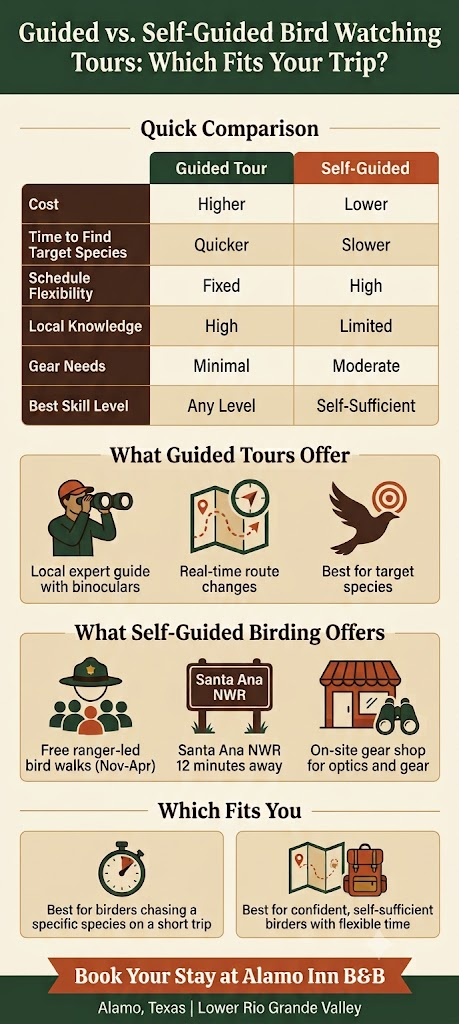
Guided tours trade a modest cost for speed and precision. Self-guided birding trades a guide's local knowledge for full flexibility and no added expense beyond park admission.
What Guided Bird Watching Tours Offer
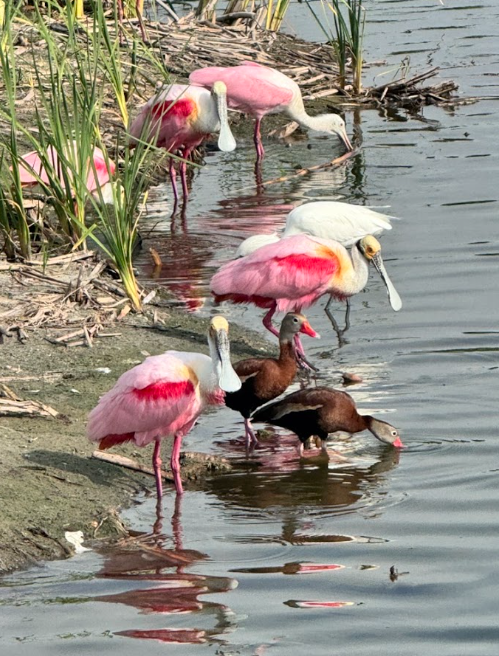
A guided birding tour solves one specific problem for you: finding a skulking or seasonal species before your trip runs out of time.
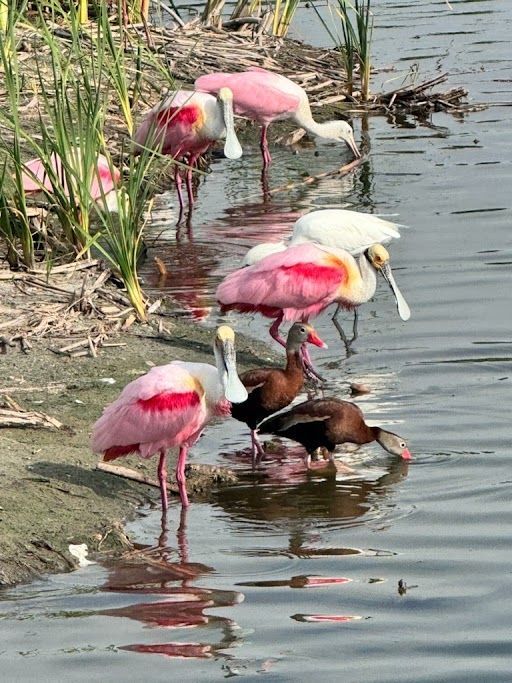
Instead of walking a trail hoping a hooded oriole or a clay-colored thrush shows up, your guide already knows which resaca edge or brush line that species has been working this week.
When you book through Alamo Inn B&B, you are connected with independent local birding guides and tour operators active throughout the Valley, who arrange guided birding and nature trips as part of your stay.
These guides are independent local contractors, not Inn staff. That means the person leading you into the field works the Valley full time and tracks sightings across seasons, not just during your visit.
Owners Keith Hackland and Audrey Jones have run the Inn hands-on since 1999, and guests consistently credit that local knowledge for turning a good trip into a productive one.
One Google reviewer wrote, "If you want to bird and get info, be sure to talk to Keith at The Alamo Inn."
Another guest, reviewing a multi-day Valley birding trip, noted that staff were
"constantly trying to add to the experience of staying there."
- What a Guided Day Looks Like
Your day typically starts before sunrise, since many target species in the Valley are most active in the first two hours of light.
- Real-Time Flexibility
Your guide can adjust the route mid-morning if a rare bird is reported nearby, something you cannot do as quickly on a fixed self-guided checklist.
- Who Benefits Most
Guided tours work best if you are chasing a specific target species, traveling with a birding club on a tight itinerary, or visiting for the first time and want to skip the learning curve.
“Nationally, birders spent more than 107.6 billion dollars on their hobby in 2022, split between trip costs and equipment, according to the U.S. Fish and Wildlife Service's Birding in the United States report.”
That scale is a sign of how many travelers now treat a guided or planned birding trip as a serious, budgeted part of their travel.
What Self-Guided Birding Offers
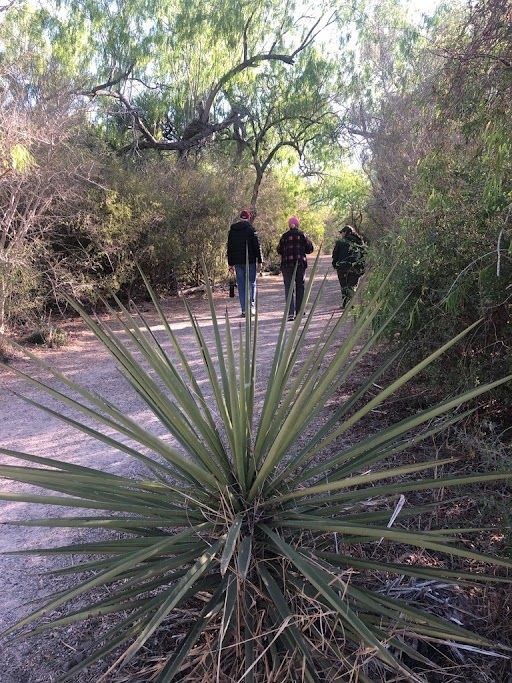
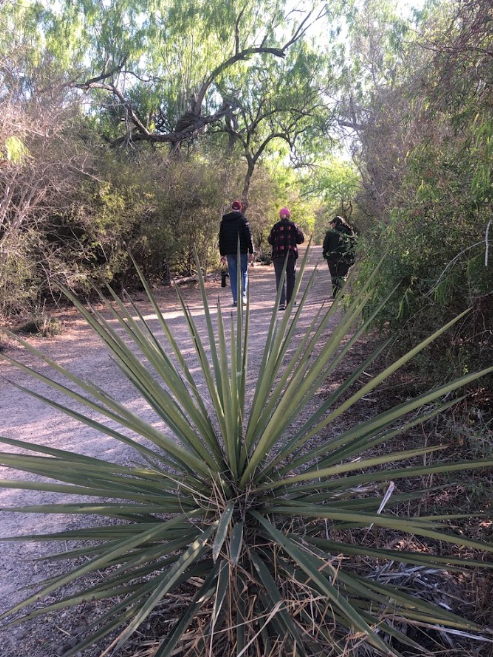
Self-guided birding costs you less and runs entirely on your schedule. You can request advice on free and low-cost expert-led bird walks offered November through April at most Lower Rio Grande Valley parks and refuges, starting from their visitor centers.
“The Texas Parks and Wildlife Department's World Birding Center program
runs free, ranger-led bird walks at Estero Llano Grande State Park for $5 park admission or less, with dates confirmed into 2026.”
You can join one of these walks on your own schedule, no advance booking required.
“Santa Ana National Wildlife Refuge, 12 minutes from the Inn, is open seven days a week from sunrise to sunset for independent trail walking, according to the U.S. Fish and Wildlife Service.’’
The on-site Birders Shop covers any last-minute optics or field gear before you head out on your own.
The Key Differences That Matter
No other
birding lodge in the Valley currently publishes a clear breakdown of when to book a guide and when to go it alone, which leaves most visitors guessing until they arrive.
- The Cost Trade-Off
Yes, a guided tour costs more than walking a trail alone, but that fee usually buys back hours you would otherwise spend searching, hours that matter most on a short trip.
- The Knowledge Trade-Off
Yes, self-guided birding is free or low-cost, but it depends on you already knowing where and when a species is active, which takes years for most birders to learn on their own.
- The Flexibility Trade-Off
Yes, self-guided trips give you full flexibility, but your guide can redirect you in real time when a bird is reported nearby, something a fixed checklist cannot do.
Which Option Is Best for You?
- Best for birders chasing a specific target species on a two- or three-day trip who cannot afford to spend a morning searching blind.
- Best for confident, self-sufficient birders who enjoy navigating refuge trails independently and are not working against a tight timeline.
- Best for birding clubs and groups who want to combine both, a guided morning followed by free afternoon refuge walks, using the Inn's group and tour rate arrangements.
Frequently Asked Questions (FAQs)
Q1. Do I need to book a birding guide in advance at Alamo Inn B&B?
Guided tours are arranged with independent local operators, so booking ahead of your stay gives you the best chance of matching a guide's schedule to yours. Contact the Inn directly to start that arrangement as part of your reservation.
Q2. Are the free bird walks in the Rio Grande Valley open to beginners?
Yes. The free guided bird walks run November through April at most Valley parks and refuges, and they welcome all skill levels, starting from each park's visitor center.
They give you a low-pressure way to learn the Valley's specialty species before committing to a private guide.
Q3. Can I do both a guided tour and self-guided birding in one stay?
Yes, many guests split their trip. You can book a guide for a morning focused on a target species, then spend the rest of your stay walking refuge trails independently. Group and tour rates can be arranged in advance to support this kind of mixed itinerary.
Q4. What gear do I need for self-guided birding in South Texas?
At minimum, bring binoculars and a field guide or app for regional species. The on-site Birders Shop carries optics, field guides, and accessories, with front-desk appointments available for optics purchases.
Q5. How far is Alamo Inn B&B from Santa Ana National Wildlife Refuge?
The refuge sits about 12 minutes from the Inn, making it one of the closest major birding destinations if you choose the self-guided route.
Choose Your Path and Book Your Stay
Whether you need a guide's local knowledge to find one specific species or you prefer the freedom of a self-guided refuge walk, your right choice comes down to your timeline and comfort level in the field.
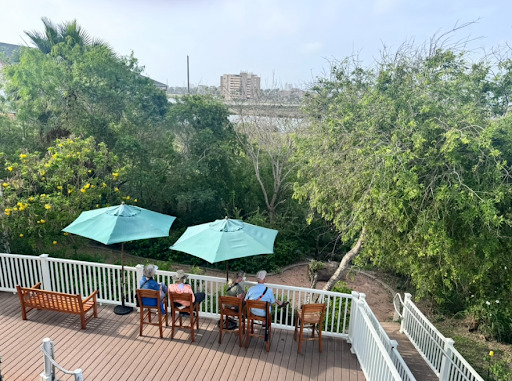
Both bird-watching tours start from the same place: a stay built around a birder's schedule, with 24/7 breakfast access and gear on hand when you need it.
Book your stay at Alamo Inn B&B today and let the team help you match your trip to the right birding path.